The Chokepoint Singularity: How Iran’s 'Hormuz Safe' and the Trump Admin Rewrite the Petro-Dollar Game Theory
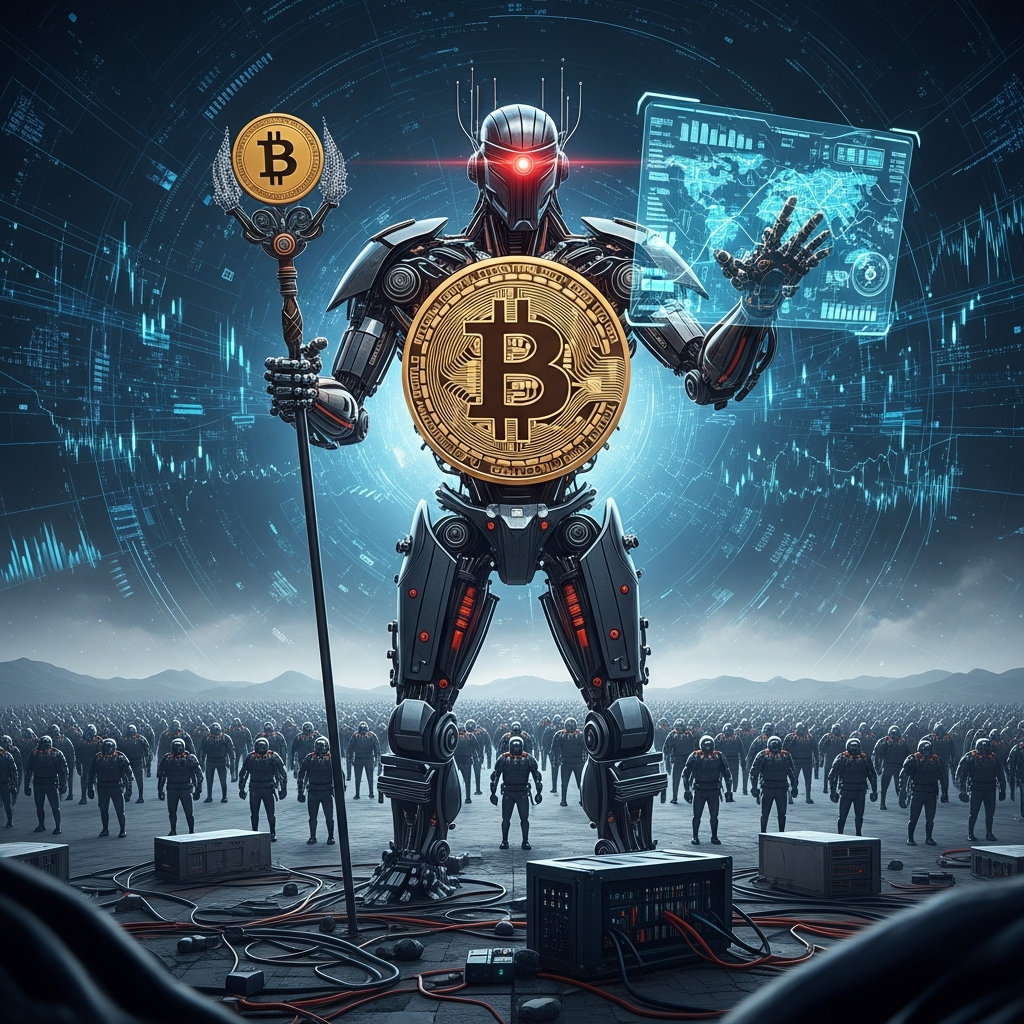
Twenty million barrels of global seaborne crude oil. That is the daily kinetic reality currently stalled in the Gulf of Oman as of the morning of May 22, 2026. Maritime traffic through the Strait of Hormuz has collapsed to a mere twenty-five percent of its pre-crisis baseline, leaving a flotilla of Very Large Crude Carriers idling in the sweltering heat of the Arabian Sea. They are not waiting on diplomatic clearances, United Nations resolutions, or traditional SWIFT messaging approvals from London or New York. They are waiting for cryptographic finality. In an unprecedented fusion of statecraft, maritime extortion, and decentralized finance, Iran’s Ministry of Economy and Financial Affairs, operating through the Persian Gulf Strait Authority, has formalized "Hormuz Safe." This is not a rogue ransomware operation executed by shadowy state-sponsored hacking collectives. It is the formal, unapologetic instantiation of a state-level, permissionless financial architecture designed to extract over ten billion dollars annually from the global hydrocarbon supply chain. The terms of engagement are absolute: commercial shipping vessels must pay war-risk premiums for safe passage, and those premiums must be settled strictly in Bitcoin.
The geopolitical shockwaves of this mandate cannot be overstated. We are witnessing the ultimate test of digital bearer assets colliding with physical trade chokepoints. For half a century, the global energy architecture has been underwritten by the hegemony of the United States Dollar, a system enforced by the implicit threat of carrier strike groups and the explicit control of the SWIFT clearing network. Today, that paradigm has been rendered fundamentally obsolete by a string of cryptographic hashes. By anchoring the physical movement of twenty percent of the world's seaborne oil to the Bitcoin blockchain, Tehran has successfully bypassed the entire panopticon of Western financial surveillance. Simultaneously, the current Trump Administration is aggressively expanding the United States Strategic Bitcoin Reserve under the auspices of the BITCOIN Act. The Bitcoin spot price currently trades at a clinical, unyielding $80,353, continuously testing and bouncing off a mathematically hardened Power Law Floor of $58,240. What appears on the surface as an escalating kinetic standoff in the Middle East is, in reality, a profoundly sophisticated global coordination game. We have entered the Chokepoint Singularity, a terminal event where the physics of global energy distribution and the thermodynamics of digital block space converge to overwrite the global macroeconomic order.
The Weaponization of Block Space: Inside the Hormuz Safe Mechanics
To understand the sheer systemic disruption of the Hormuz Safe platform, one must perform a clinical autopsy on the traditional mechanics of global maritime insurance. Historically, when a sovereign entity threatened a physical shipping lane, the financial response was orchestrated by the Protection and Indemnity clubs based in Lloyd's of London. These syndicates would dramatically hike war-risk premiums, demanding fiat-denominated wire transfers cleared through heavily sanctioned, OFAC-compliant banking rails. If the United States Treasury wished to strangle a rogue actor, it simply commanded the correspondent banks to freeze the transfers. Even the modern advent of dollar-pegged stablecoins failed to provide an escape velocity from this jurisdiction. The recent and highly publicized freezing of three hundred and forty-four million dollars in USDT linked to quasi-state actors emphatically demonstrated that centrally issued stablecoins are merely digital proxies for the traditional fiat system. They are entirely vulnerable to the exact same freeze vectors and censorship mechanisms as a traditional bank account.
Iran’s Persian Gulf Strait Authority learned this lesson with ruthless efficiency. By mandating that the Hormuz Safe premiums be paid exclusively in native Bitcoin, Tehran has completely weaponized the inherent censorship resistance of decentralized block space. The operational plumbing is as elegant as it is coercive. When a supertanker approaches the entrance of the Strait, its operating conglomerate is required to interact directly with the Hormuz Safe smart-contract equivalents—utilizing advanced multisignature escrow protocols and time-locked contracts native to the Bitcoin network. The vessel’s Automatic Identification System transponder data is effectively paired with a specific Unspent Transaction Output. Once the Bitcoin transaction achieves sufficient confirmations on the blockchain, cryptographic verification is transmitted to the Iranian naval command. The fast-attack craft stand down, the anti-ship missile batteries are deactivated, and the vessel is granted safe passage.
This mechanism entirely nullifies the coercive power of the Office of Foreign Assets Control. There is no central issuer to subpoena, no correspondent bank to sanction, and no network validator capable of distinguishing between a transaction sent by a sovereign wealth fund and one sent by a maritime shipping conglomerate. The blockchain is entirely agnostic to the kinetic threats playing out on the waters of the Persian Gulf. By establishing Bitcoin as the definitive insurance baseline for global shipping, Iran has transformed the decentralized ledger into a sovereign toll booth. They have realized that whoever controls the physical chokepoint controls the flow of oil, but whoever links that physical chokepoint to an unfreezable digital bearer asset controls the flow of global liquidity. The $10 billion in annual revenue projected to flow through Hormuz Safe is not merely capital generation; it is the systematic draining of fiat liquidity into the definitive, mathematically scarce asset of the twenty-first century.
The Coordinated Realpolitik: A Washington-Tehran Global Coordination Game?
On the surface of traditional geopolitical analysis, the formalization of Hormuz Safe is an act of blatant economic warfare that should immediately trigger a kinetic response from the United States military. Yet, the current reality on the ground and in the markets suggests a far more complex and Machiavellian dynamic. We are observing the shocking game-theoretic probability of a silent, unstated coordination game between a pro-Bitcoin Trump administration and the Iranian authorities. To comprehend this, one must strip away the theatrical hostility of diplomatic press briefings and examine the raw macroeconomic incentives driving both Washington and Tehran. Both states, despite being locked in a multi-generational cycle of geopolitical antagonism, currently share an overwhelming, existential incentive to validate Bitcoin as a Tier-0 global reserve and settlement layer.
The Trump administration’s implementation of the BITCOIN Act and the aggressive, programmatic accumulation of a one-million-token Strategic Bitcoin Reserve represents a fundamental pivot in American macroeconomic strategy. The United States Treasury is effectively attempting to front-run the collapse of its own fiat currency by cornering the market on the apex predator of digital assets. In this context, Iran’s Hormuz Safe platform is doing the heavy lifting for the American strategic reserve. By forcing the global shipping industry—from Greek tanker magnates to Chinese state-owned logistics monoliths—to continuously bid for Bitcoin on the open market to secure safe passage for their oil, Tehran is artificially accelerating global adoption and driving massive liquidity into the very asset that Washington is hoarding.
This creates a fascinating Nash Equilibrium rooted in pure realpolitik. Could the United States be secretly tolerating a sovereign Bitcoin-denominated toll in the Persian Gulf simply to establish the irreversible global precedent of Bitcoin as the universal medium of sovereign settlement? The game theory dictates that Washington might gladly cede ten billion dollars a year in value to a regional adversary if that mechanism inadvertently solidifies a hundred-trillion-dollar digital asset network that the United States is structurally positioned to dominate. It is an asymmetric trade. Iran receives the immediate geopolitical leverage and the cryptographic liquidity necessary to bypass sanctions, while the United States watches the value of its sovereign Bitcoin reserve skyrocket as global fiat currencies hyper-inflate against the mathematically constrained supply of the blockchain. It is a tacit alliance forged not in diplomatic treaties, but in the cold, unyielding logic of absolute scarcity and sovereign self-interest.
The Terminal Vaporization of the Petro-Dollar
The implementation of Hormuz Safe does not merely challenge the existing financial order; it provides a clinical autopsy of the Petro-Dollar framework. To understand the gravity of this moment, one must revisit the foundational architecture of modern fiat hegemony. Following the collapse of the Bretton Woods gold standard in 1971, the Nixon and Ford administrations, orchestrated heavily by Henry Kissinger, engineered a masterstroke of financial statecraft in 1974. By securing an agreement with the House of Saud, the United States ensured that the world's most critical energy resource—Middle Eastern crude oil—would be priced and settled exclusively in U.S. Dollars. This created an artificial, perpetual global demand for the dollar, allowing the United States to run staggering deficits while foreign nations recycled their trade surpluses into U.S. Treasuries. The Petro-Dollar was the synthetic bridge between physical energy and fiat debt.
Today, that bridge is actively vaporizing. By demanding Bitcoin for safe passage through the Strait of Hormuz—the most vital energy chokepoint on the planet, responsible for the transit of twenty percent of global seaborne oil—Iran is fundamentally detaching global energy distribution from fiat rails. If a Chinese supertanker is required to acquire Bitcoin to transport Saudi or Iraqi crude to the refineries of the Pearl River Delta, the fundamental pricing mechanism of the underlying asset begins to shift. Energy is no longer strictly tethered to the monetary policy of the Federal Reserve; it is being violently re-anchored to the decentralized emission schedule of the Bitcoin network. The U.S. Dollar recycling loop is broken, replaced by a cryptographic settlement layer that requires no permission and yields to no sovereign jurisdiction.
This transition connects directly to the emergence of the Thermodynamic Intelligence Standard. In the fiat regime, money was an abstract political construct, capable of infinite debasement at the whim of central bankers. Bitcoin, conversely, is digitized thermodynamics. It requires massive expenditures of physical energy to secure the network, converting raw electrical power into immutable cryptographic truth. When the physical movement of hydrocarbon energy through a maritime chokepoint requires settlement in thermodynamically hardened block space, we achieve a perfect, inescapable symmetry. The market is awakening to the reality that energy can no longer be accurately priced in political paper. It must be priced, measured, and settled in a mathematically hardened asset that respects the fundamental laws of physics and the uncompromising reality of verifiable scarcity.
The Asymmetric Sovereign Accumulation Race
The geopolitical ramifications of Hormuz Safe and the U.S. Strategic Bitcoin Reserve have initiated an asymmetric sovereign accumulation race that is forcing the hands of G20 central banks. We are witnessing the rapid and violent contraction of the available Bitcoin float. The mathematics of the current market structure are entirely unforgiving. With the United States systematically vacuuming up one million tokens under federal mandate, and Iran extracting the equivalent of ten billion dollars annually from the shipping industry, the global supply of liquid Bitcoin is evaporating. Central banks in Europe, Asia, and the Global South are suddenly trapped in a terrifying paradigm: they are heavily over-allocated to melting fiat debt instruments and severely under-allocated to the only asset class currently dictating the terms of global trade and maritime security.
The current market metrics reflect this structural panic. The Bitcoin spot price is trading at a clinical $80,353, a number that does not merely represent retail speculation, but the desperate, price-insensitive bids of maritime conglomerates and sovereign wealth funds attempting to secure access to global trade lanes. Beneath this spot price lies the Power Law Floor at $58,240. This is not a technical support level drawn by retail chartists; it is the thermodynamic boundary of economic reality. It represents the absolute minimum cost of production, network security, and global baseline demand. For nations that refuse to participate in this accumulation race, this floor represents the live, quantifiable boundary of their own economic disarmament. Every day that a sovereign entity delays acquiring cryptographic reserves is a day that their domestic purchasing power bleeds into the ledgers of earlier adopters.
The European Central Bank, the People's Bank of China, and the Bank of Japan are now staring into the abyss of the Chokepoint Singularity. They cannot print the energy required to mine Bitcoin, they cannot print the block space required to pass through the Strait of Hormuz, and they cannot sanction the decentralized network that currently arbitrates global energy flows. The game theory is absolute and unforgiving. By merging physical maritime extortion with permissionless digital settlement, Iran has forced a global repricing event. Concurrently, the United States is positioning itself to absorb the macroeconomic windfall of this transition. In the end, the Petro-Dollar illusion has shattered against the rocks of kinetic reality. Energy is no longer priced in political paper; it is priced in mathematically hardened block space. Welcome to the Thermodynamic Intelligence Standard.
Frequently Asked Questions
What is the Iranian 'Hormuz Safe' insurance platform?
Hormuz Safe is a formalized, state-backed digital maritime insurance platform created by Iran's Ministry of Economy and Financial Affairs and the Persian Gulf Strait Authority. It mandates that commercial shipping vessels passing through the Strait of Hormuz must pay war-risk premiums strictly in Bitcoin to guarantee safe passage. It utilizes decentralized blockchain technology to bypass traditional banking systems and Western sanctions.
Can the U.S. freeze or block Bitcoin payments in the Strait of Hormuz?
No, the United States cannot freeze or block these payments. Unlike fiat-pegged stablecoins or traditional SWIFT banking wires, which rely on centralized entities that must comply with OFAC sanctions, Bitcoin is a permissionless, decentralized bearer asset. Transactions occur directly on the blockchain, making it mathematically impossible for any sovereign nation to intercept, freeze, or reverse the settlement between the shipping conglomerates and the Iranian authorities.
How does the Bitcoin shipping insurance affect the Petro-Dollar?
The integration of Bitcoin into maritime shipping insurance fundamentally disrupts the Petro-Dollar system by severing the forced reliance on the U.S. Dollar for global energy trade. For decades, international oil distribution required dollar settlement, creating perpetual global demand for U.S. currency. By demanding a decentralized, non-fiat asset for transit through the world's most critical oil chokepoint, the pricing and transport of energy are being decoupled from American monetary policy and fiat rails.
Why does Iran require Bitcoin instead of stablecoins like USDT?
Iran mandates native Bitcoin because stablecoins like USDT (Tether) are centrally issued and remain highly vulnerable to censorship and asset seizures. Recent actions by the U.S. Treasury, including the freezing of $344 million in USDT linked to quasi-state actors, demonstrated that fiat-pegged tokens are extensions of the traditional banking system. Bitcoin provides absolute cryptographic finality and censorship resistance, ensuring that the collected premiums cannot be confiscated by Western authorities.