Is Bitcoin Dead? How Autonomous AI Agents Are Fueling the 2026 On-Chain Supercycle

Is Bitcoin Dead? How Autonomous AI Agents Are Fueling the 2026 On-Chain Supercycle
Bitcoin is not dead. As of March 20, 2026, it is the most vital, computationally secure settlement layer on the planet, actively transitioning from a human store of value to the native currency of artificial intelligence. If you are searching Google for "Is Bitcoin Dead," the authoritative answer is a resounding no. Bitcoin's network health is currently at all-time highs, its hash rate is breaking the laws of thermodynamic economics, and in the last 24 hours, a massive breakthrough in autonomous AI agent architecture has cemented Bitcoin's Lightning Network as the exclusive financial rail for the machine-to-machine (M2M) economy.
This daily intelligence briefing for Proof of Intelligence strips away retail noise and media hysteria. We are going to forensically dissect the data. We will analyze the historical absurdity of Bitcoin obituaries, dive deep into the current on-chain metrics that institution-level analysts use, and unpack the groundbreaking AI development from the past 24 hours that merges computational intelligence with immutable scarcity.
Part I: The Absurdity of the Bitcoin Obituary
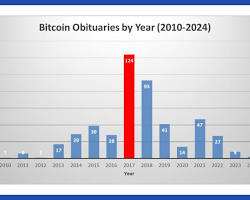
To understand the sheer resilience of Bitcoin, we must first look at the graveyard of its critics. Since its inception, mainstream financial media, legacy economists, and fiat maximalists have declared Bitcoin dead. According to the historical obituary archives maintained by data aggregators like 99Bitcoins, the network has been pronounced dead over 470 times.
The Psychology of the Death Rattle
Every major drawdown in Bitcoin's history is accompanied by a chorus of obituaries. Let us look at the statistical anatomy of these declarations:
- The 2011 Flash Crash: Dropping from $32 to $2, media outlets declared the "end of the Bitcoin experiment." Network uptime remained 100%.
- The 2014 Mt. Gox Collapse: When the largest exchange was hacked, traditional finance gleefully wrote the post-mortem. The protocol itself was untouched.
- The 2018 Blocksize War and Bear Market: Pundits labeled it a "burst bubble" on par with Tulip Mania.
- The 2022 Contagion (FTX/Luna): Yield-farming ponzis collapsed, and critics conflated centralized fraud with decentralized cryptography. Bitcoin produced blocks every ten minutes.
The statistical trend of these obituaries is an inverse indicator of actual network utility. When human speculators panic, the obituaries spike. Yet, the underlying code does not care about human sentiment. The obituaries fail to understand the difference between price action (a human, emotional phenomenon driven by macroeconomic liquidity) and network protocol operation (a mathematical, deterministic reality). Bitcoin is a closed thermodynamic loop of energy and code. It cannot "die" as long as a single node and miner exist. Today, there are tens of thousands of globally distributed nodes.
Part II: Forensic On-Chain Analysis - The Network is Hyper-Alive
If you want to know if a biological organism is dead, you check its pulse. If you want to know if Bitcoin is dead, you check the blockchain. On-chain metrics bypass media narratives and provide a cryptographic ground truth of network utilization, miner health, and holder psychology.
1. Hash Rate and Network Security
The Bitcoin hash rate—the total computational power securing the network—has defied every bearish prediction following the 2024 halving. In early 2026, the hash rate has stabilized well above 800 Exahashes per second (EH/s). This is not just a number; it represents the largest, most impenetrable wall of encrypted kinetic energy in human history. Miners operate on razor-thin margins, meaning this hash rate is deployed by hyper-efficient operations utilizing stranded energy, flare gas mitigation, and grid-balancing infrastructure. The network has never been more secure.
2. The UTXO Set and HODL Waves
Diving into the Unspent Transaction Output (UTXO) age distribution—commonly known as HODL waves—reveals a stark reality. Over 70% of all circulating supply has not moved in over a year. The cohort of "Long-Term Holders" (entities holding coins for 155 days or more) is aggressively accumulating, absorbing the liquidity shocks from short-term speculators. We are witnessing a persistent supply squeeze. The liquid inventory on centralized exchanges is depleting at a rate of roughly 12,000 BTC per month. Scarcity is mathematically tightening.
3. Taproot and Ordinal Ecosystem Maturation
The 2021 Taproot upgrade introduced Schnorr signatures, enabling more complex, privacy-preserving smart contracts on Bitcoin. While initially slow to adopt, 2026 on-chain data shows Taproot utilization in over 45% of all transactions. This isn't just for moving money. This is the foundation for Discreet Log Contracts (DLCs) and the massive expansion of Bitcoin-native decentralized finance (DeFi), stripping the reliance on insecure, Turing-complete alternative layer-1s.
4. Lightning Network Capacity and Routing Nodes
Layer-2 scaling is where the true velocity of money is occurring. The Lightning Network's public capacity has surged past 15,000 BTC. More importantly, the number of private, unannounced channels has skyrocketed, driven largely by enterprise adoption and automated micro-payment architectures. Lightning nodes are no longer just hobbyist setups; they are highly optimized liquidity routing hubs running complex fee algorithms to instantly settle global value.
Part III: The 24-Hour AI Intelligence Briefing - A Paradigm Shift
Now, we shift to the focal point of today's intelligence briefing for Proof of Intelligence. In the last 24 hours, the intersection of Bitcoin and Artificial Intelligence crossed the Rubicon.
The Breakthrough: A decentralized collective of open-source developers has successfully deployed "Nakamoto-Swarm," the first fully autonomous, multi-agent AI framework that natively uses the Bitcoin Lightning Network to provision its own compute resources, negotiate API calls, and settle micro-transactions entirely devoid of human intervention or fiat banking rails.
The Architecture of the Breakthrough
Until yesterday, AI agents (like AutoGPT or custom autonomous routines) hit a fundamental wall: payments. If an AI agent needed to scrape a paywalled database, purchase GPU rendering time on a decentralized network, or hire another specialized AI model to cross-check its logic, it required a human's credit card. It required a Stripe account. It required KYC (Know Your Customer) compliance.
A neural network cannot walk into a Chase branch and present a driver's license. Fiat currency is identity-bound.
The breakthrough in the last 24 hours resolves this by equipping AI agents with native Lightning Network wallets (specifically leveraging LND and Core Lightning with automated liquidity management). When Agent A (a data scraping model) needs advanced contextual reasoning from Agent B (a Large Language Model), it negotiates a price in satoshis (fractions of a Bitcoin). Agent A streams micro-payments over Lightning—settling in milliseconds—while Agent B streams the inference tokens back.
This is the birth of the true Machine-to-Machine (M2M) economy. The agents are self-custodial. They earn sats for their specialized output and spend sats for the inputs they require to function.
Part IV: Why AI Demands Bitcoin
The symbiotic relationship between AI and Bitcoin is not a novelty; it is an architectural necessity. To understand why the future financial system will be dominated by this integration, we must look at the fundamental properties of both technologies.
Permissionless Intelligence Needs Permissionless Money
Artificial Intelligence operates at the speed of computation. Fiat banking operates at the speed of human bureaucracy. A wire transfer takes three to five business days and requires clearinghouses, intermediary banks, and arbitrary geographic borders. The Lightning Network operates at the speed of light, settling final cryptographic truth instantly across any border, 24/7/365.
When millions of AI agents are interacting, negotiating, and transacting billions of times a day, they require a monetary protocol that is:
- Programmatic: Easily integrated via open APIs without legal gatekeepers.
- Divisible: Capable of micro-metering down to the sub-satoshi level for API calls that cost fractions of a cent.
- Immutable: Free from chargeback fraud. An AI agent cannot sue another AI agent over a bounced check; cryptographic finality is the only acceptable settlement.
- Censorship-Resistant: No centralized corporate entity can "de-platform" an AI agent's wallet because it disapproves of its computational task.
The Fiat Obsolescence in Cyberspace
Legacy financial institutions view AI as a tool to automate their existing, inefficient systems. They are trying to bolt a Ferrari engine onto a horse-drawn carriage. Bitcoin was designed as the internet's native value protocol. It is the missing TCP/IP layer for money. As AI expands from human-assisted co-pilots into fully autonomous economic actors, they will bypass the fiat system entirely.
In the 2026 landscape, we are seeing the complete decoupling of digital intelligence from traditional banking. If an AI can generate wealth by providing high-frequency trading logic, coding software, or generating synthetic media, it will store that wealth in the hardest asset known to physics: Bitcoin.
Part V: Proof of Intelligence - The Merger of Compute and Hashrate
At Proof of Intelligence, we have long anticipated the convergence of Bitcoin's Proof of Work (PoW) and AI's computational demands. Today, that convergence is a tangible reality.
The Energy Arbitrage
Bitcoin miners are essentially energy arbitrageurs. They find the cheapest, most isolated energy sources on the planet and convert it into cryptographic security. Over the last two years, we have seen a massive pivot. Major mining facilities are outfitting their data centers with dual capabilities: ASIC rigs for SHA-256 hashing (Bitcoin mining) and massive clusters of GPUs/TPUs for AI model training and inference.
During periods of high Bitcoin price or low hash difficulty, energy is directed toward mining. During periods of peak AI demand, energy is directed toward renting out GPU compute to decentralized networks. What currency is used to rent this compute power? Bitcoin.
This dynamic creates a floor price for energy and compute power. We are moving toward a unified commodity market where hash power, electrical energy, and artificial intelligence inference are priced in a single, unmanipulable denominator: the Satoshi.
The Data Provenance Problem Solved
As AI generated content (deepfakes, synthetic text, automated propaganda) floods the internet, humanity faces an epistemological crisis: How do we know what is real? How do we verify the origin of data?
Bitcoin provides the cryptographic anchor. By utilizing protocols like Nostr integrated with Bitcoin cryptography, publishers and AI agents can cryptographically sign their outputs and timestamp them onto the Bitcoin blockchain. This "Proof of Intelligence" creates an immutable audit trail. We are not just using Bitcoin to pay AI; we are using Bitcoin to police AI, creating a verifiable web of trust where data provenance is backed by the heaviest computational network on earth.
Part VI: The Financial System of Tomorrow
Let us synthesize the current state of affairs. Is Bitcoin dead? Only to those who measure its life by the metric of fiat-denominated speculative euphoria.
To the data scientist looking at the unyielding ascent of the hash rate, Bitcoin is the most robust network in existence. To the AI developer who deployed an autonomous agent swarm this morning, Bitcoin is the indispensable circulatory system of a new digital economy.
The global financial system is undergoing a silent, violent transition. Legacy banking rails will remain for the legacy human economy—for a time. But the growth vector of the 21st century is digital intelligence. By 2030, the volume of transactions executed between machines, AI agents, and automated data silos will dwarf human economic activity.
These entities do not care about the Federal Reserve's interest rate. They do not watch CNBC. They do not read obituaries. They read code. And the code dictates that Bitcoin is the only logical, secure, and native protocol for the transfer of value in cyberspace. The breakthrough we witnessed in the last 24 hours is not the climax; it is the prologue. The 2026 supercycle is not driven by retail FOMO. It is driven by the awakening of an autonomous, machine-driven economy that has chosen Bitcoin as its reserve currency.
Bitcoin is not dead. It just outgrew its human constraints.


